





Agentic AI for Manufacturing
Detect anomalies early, contain quality deviations, and orchestrate corrective workflows across MES, ERP, and plant systems — with full traceability.
The Problem
Modern manufacturing environments generate vast volumes of process, equipment, and quality data—yet corrective actions remain slow and siloed. Quality deviations are often discovered late, investigations require manual correlation across MES, ERP, and SCADA systems, and containment workflows depend heavily on human coordination
Process anomalies are often identified after batch completion, increasing scrap and rework exposure.
Engineers must manually correlate MES, ERP, SCADA, and maintenance data to identify root causes.
Approvals, supplier coordination, and containment decisions lack structured orchestration.
Predictive signals exist but are not operationalized into workflow-driven action.
Audit documentation for quality and regulatory compliance is manually compiled.
Agent Capabilities
Autonomous agents monitor production signals, detect anomalies, and orchestrate corrective workflows across systems — safely and with policy control.
Auto-triage incidents, assign severity, and route to the correct CI + owner.
Auto-categorize, prioritize, and reduce ticket noise so queues reflect real work.
Works across IT and OT environments
Aura integrates via adapters across:


Pilot KPIs
We measure operational impact, not isolated model accuracy.
SAIDI reduction
SAIFI improvement
Crew dispatch efficiency
Restoration time reduction
Call center deflection rate
Customer satisfaction uplift
What the agent does
Observe → Detect → Contain → Corrrect → Optmize → Learn

Signal Ingestion
Ingest process signals, machine telemetry, and quality metrics

Impact Zone Detection
Detect abnormal patterns or drift

Circuit Prioritization
Identify impacted lots and production windows

Crew Dispatch Optimization
Trigger containment and notify stakeholders

Automation
Open corrective action workflows with assigned ownership

Validation
Validate closure evidence

Compliance
Update models based on outcomes

Example Agent actions
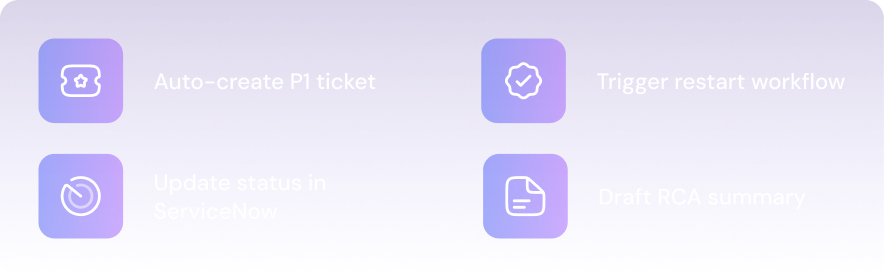
- Anomaly detected → contain affected lots → notify stakeholders
- Create corrective action → assign owner → verify closure evidence
- Predictive maintenance → schedule work → minimize downtime
Quality & Control
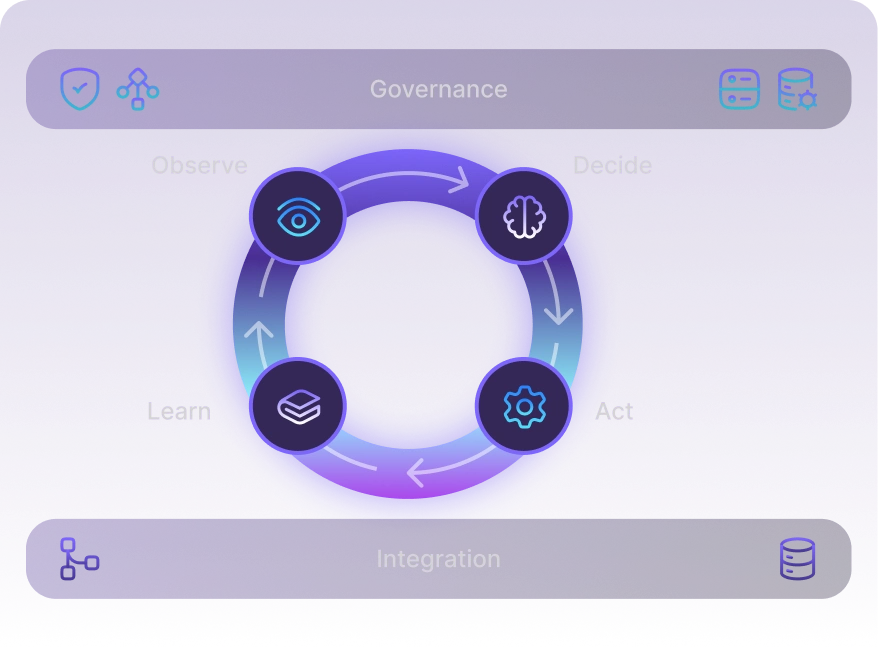
Reference architecture
Observe → Decide → Act → Learn.
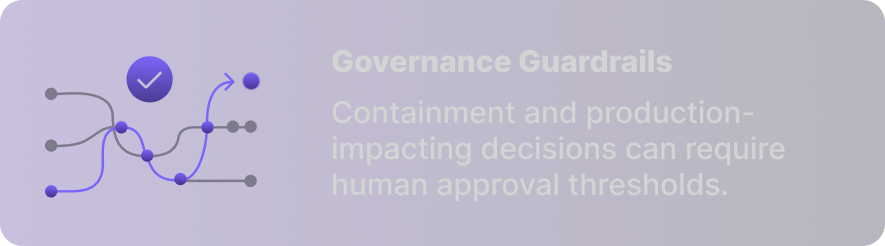
Signals inform decisions, policies constrain actions, and every tool call is tracked—so automation is measurable and auditable.
Signals
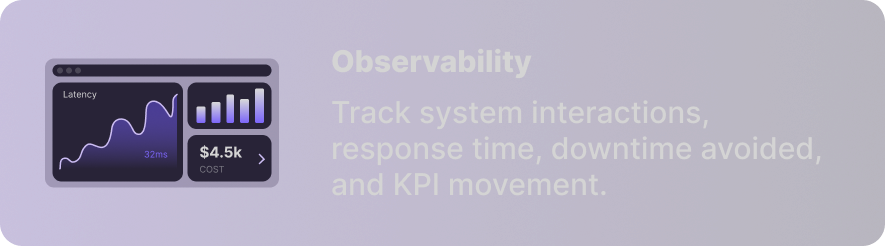
Track tool calls, latency, cost, and KPI outcomes with traceability.
Policies
Risk thresholds, approvals, access, and routing rules
Toolbox
ITSM, runbooks, DevOps tools, and knowledge systems
Audit
Evidence, logs, outcomes, and governance reporting
Pilot Plan
Focus on 2–3 high-volume workflows first, then expand based on measured results.
Data intake + critical workflow selection + baseline KPI capture
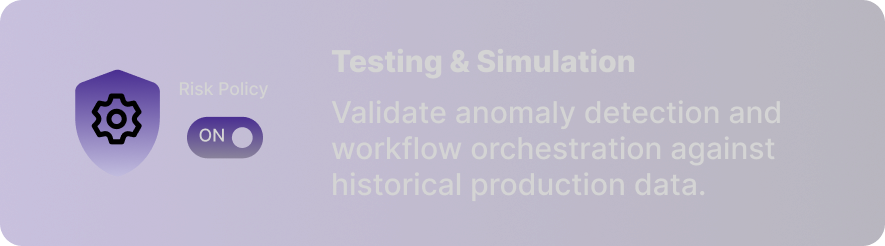
Deploy anomaly detection + limited containment automation
Expand corrective workflow orchestration + maintenance integration
Measure KPI movement + scale roadmap across lines or plants