





Agentic AI for Utilities
Predict, prioritize, and coordinate outage response across systems, crews, and customer channels — with full governance and auditability.
The Problem
Modern utilities operate under escalating environmental, regulatory, and customer pressure. Extreme weather events, distributed energy resources, aging infrastructure, and rising demand create outage surges that overwhelm manual coordination models.
Storms and wildfire incidents generate cascading alarms across circuits, overwhelming control rooms and slowing prioritization.
OMS, CIS, GIS, SCADA, IVR, and workforce systems operate independently, requiring manual cross-referencing.
Crew prioritization and routing rely heavily on human judgment, slowing restoration sequencing.
Inbound calls spike during outages, reducing capacity for high-priority cases.
Restoration documentation, customer impact reporting, and compliance evidence require structured traceability.
Agent Capabilities
Autonomous agents orchestrate outage response end-to-end—predicting risk, coordinating field execution, and maintaining compliance visibility.
Auto-triage incidents, assign severity, and route to the correct CI + owner.
Auto-categorize, prioritize, and reduce ticket noise so queues reflect real work.
Works with your ITSM ecosystem
Aura integrates via adapters across:


Pilot KPIs
We measure operational movement, not theoretical AI value.
SAIDI reduction
SAIFI improvement
Crew dispatch efficiency
Restoration time reduction
Call center deflection rate
Customer satisfaction uplift
What the agent does
Observe → Predict → Prioritize → Dispatch → Communicate → Learn

Signal Ingestion
Ingest grid telemetry, alarms, and weather signals

Impact Zone Detection
Identify probable impact zones

Circuit Prioritization
Rank circuits by customer and critical infrastructure impact

Crew Dispatch Optimization
Dispatch optimized crew assignments
Automation
Trigger proactive customer notifications

Validation
Validate restoration evidence

Compliance
Generate compliance-ready documentation

Example Agent actions
- Predict outage hotspots → prioritize circuits → dispatch crews
- Auto‑update customers on ETR and safety guidance
- Create work orders → confirm restoration → close loop with evidence
Quality & Control
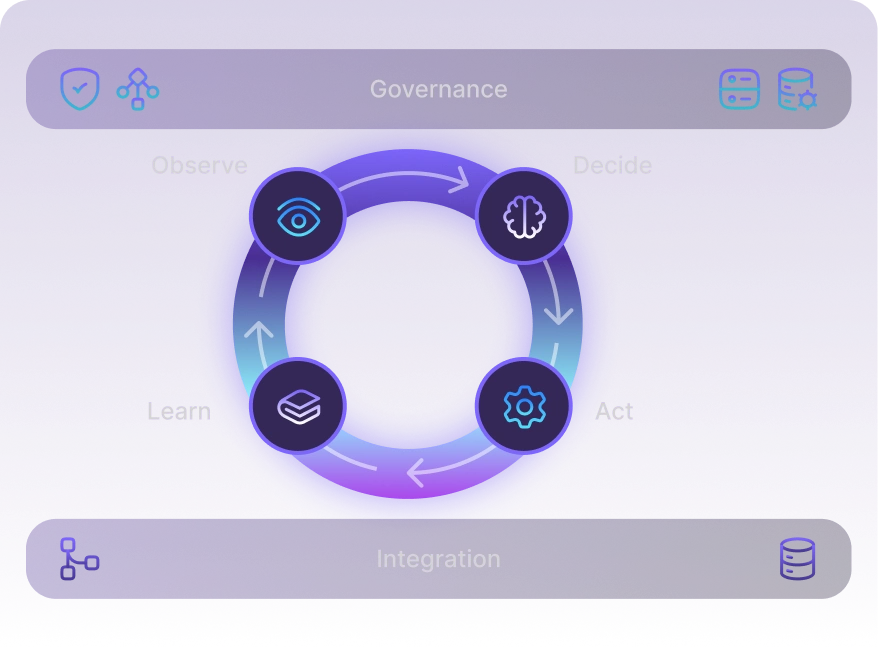
Reference architecture
Observe → Decide → Act → Learn.
Signals inform decisions, policies constrain actions, and every tool call is tracked—so automation is measurable and auditable.
Signals
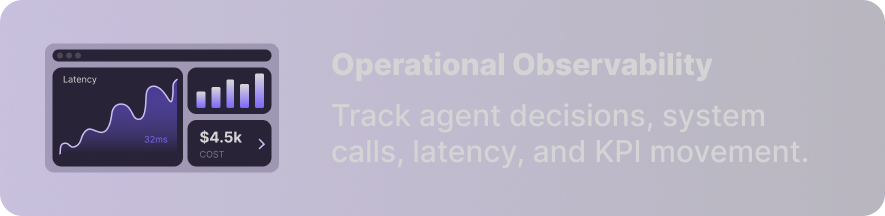
Track tool calls, latency, cost, and KPI outcomes with traceability.
Policies
Risk thresholds, approvals, access, and routing rules
Toolbox
ITSM, runbooks, DevOps tools, and knowledge systems
Audit
Evidence, logs, outcomes, and governance reporting
Pilot Plan
Focus on 2–3 high-volume workflows first, then expand based on measured results.
System intake + outage workflow mapping + baseline KPI capture
Deploy predictive prioritization + limited crew orchestration
Expand automation + customer communications integration
Measure KPI movement + restoration improvement + scale roadmap